



Authorised Eyerising distributor

Slowing childhood myopia with gentle red light

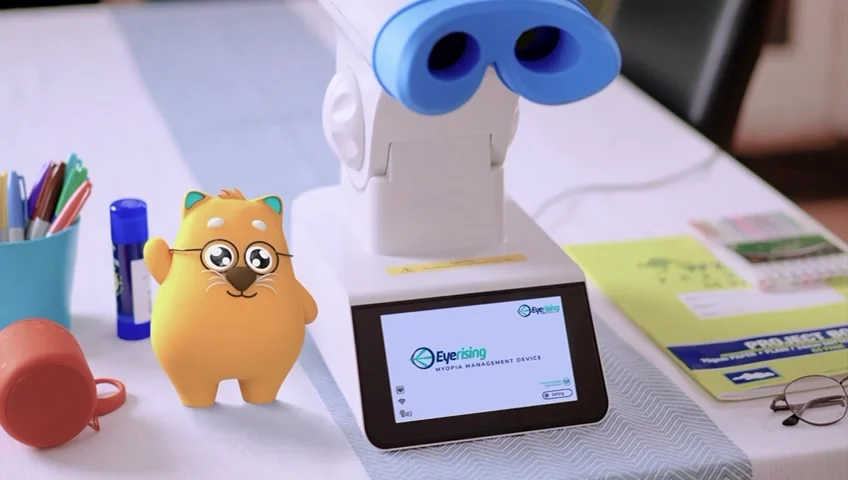
The Eyerising Myopia Management Device delivers repeated low-level red-light (RLRL) therapy at home, in three-minute sessions prescribed and monitored by your eye-care professional.

Session complete3:00 · morning
Next session in4 h
650nm
40+
countries approved, including Saudi Arabia
3 min
per session, at home
3–16
years, the age range it is indicated for
Live
compliance data for the treatment, shared with the clinician
SFDA MDMA-2-2025-3726Saudi ArabiaARTG 412752AustraliaISO 13485:2016Certified manufacturing40+ countriesRegulatory approvals
Why it matters

Myopia is an eye-growth problem, not just a glasses number

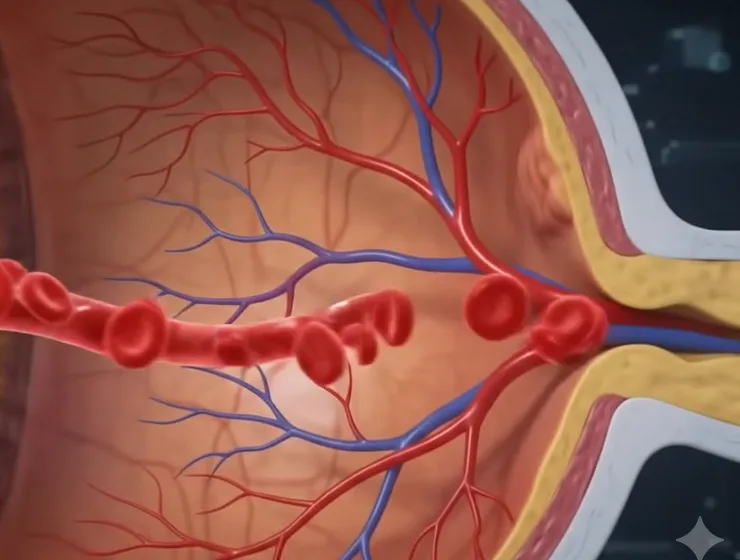
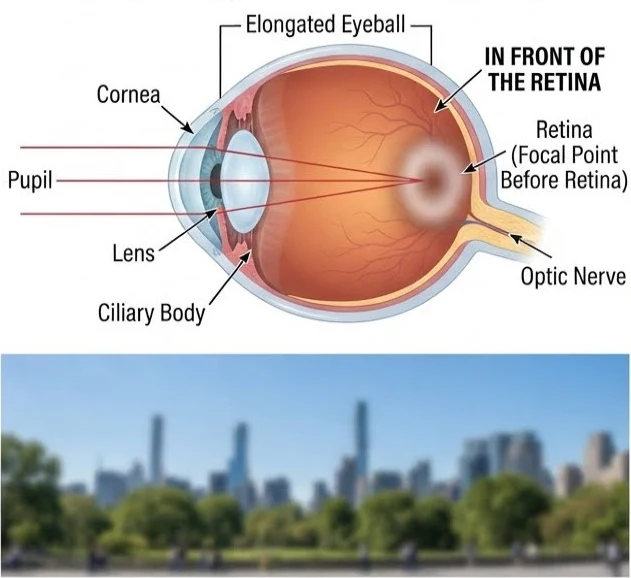
In most children, myopia gets worse because the eyeball grows too long from front to back. About 1 mm of extra growth adds roughly 2.5 to 3.0 diopters to the prescription. Glasses make vision clear, but they do not slow that growth.

  1. 01Children who become myopic early tend to progress for longer.
  2. 02High myopia raises the lifetime risk of retinal detachment, myopic maculopathy and glaucoma.
  3. 03Slowing eye growth during childhood is the main goal of myopia management.
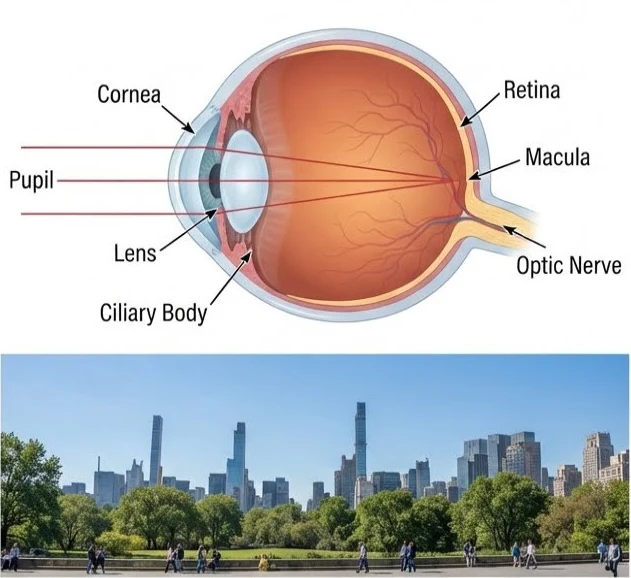
Normal eyeLight focuses on the retina
Normal eye: Light focuses on the retina
Myopic eyeLonger eye, focus falls short
Myopic eye: Longer eye, focus falls short

Axial length +1 mm ≈ 2.5–3.0 D

How RLRL therapy works

Three minutes, twice a day, at home

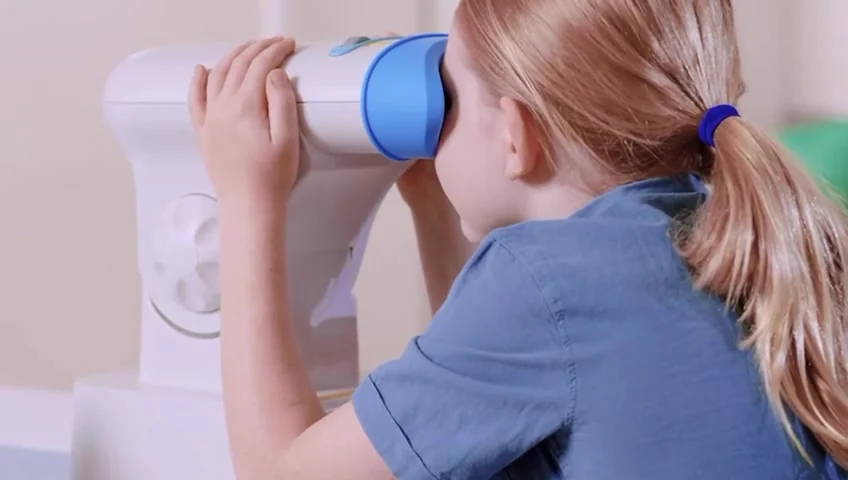
The child looks into the device while it delivers low-level red light (650 nm) to the back of the eye. Studies link this to a thicker choroid and slower axial elongation. The device records every session, so the clinician can follow compliance and progress.

3minutesper session
2timesa day, at least 4 hours apart
5daysa week
Explore the device
Who we work with

Built for clinics, trusted by families

For clinics

For clinics and hospitals

Add an evidence-based, non-invasive option to your myopia management service.

  • Demo device and hands-on training
  • Simple prescribing workflow with IHCC
  • Online monitoring of every patient session
  • Local support in Saudi Arabia
Become a partner clinic
For parents

For parents

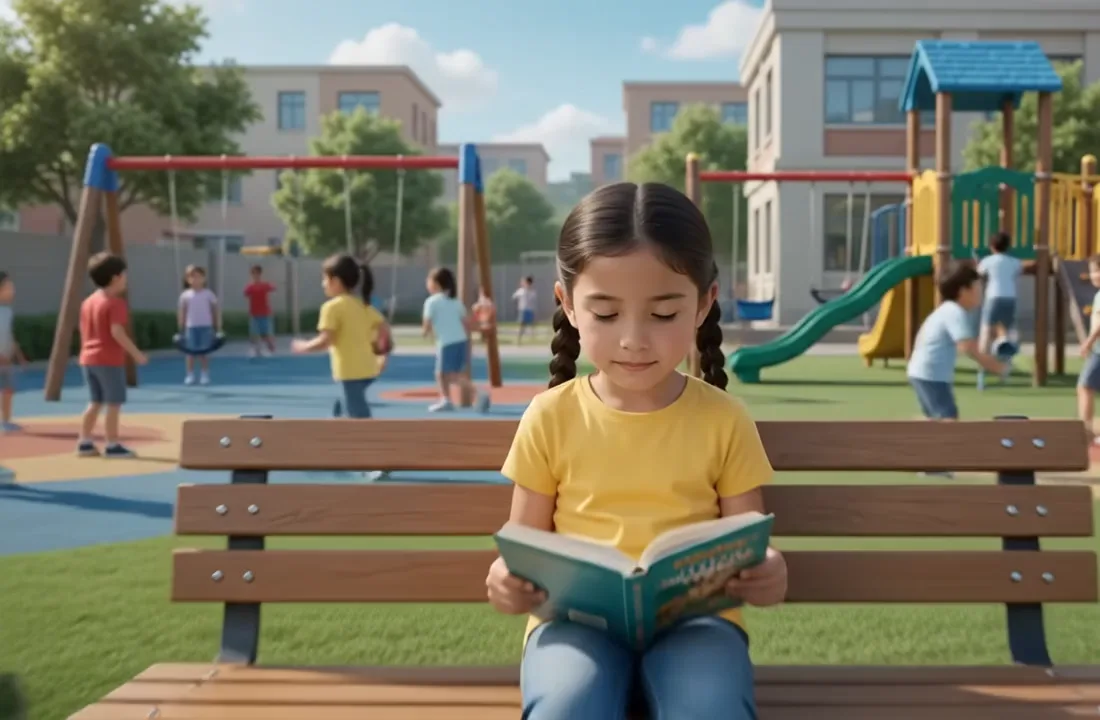
Understand your child’s myopia, the treatment options, and what RLRL therapy at home involves.

  • What myopia is and why it progresses
  • Daily habits that protect young eyes
  • How treatment fits into family routine
  • Answers reviewed by eye-care specialists
Information for parents
Clinical evidence

Supported by randomised trials and meta-analyses

Multiple randomised clinical trials and systematic reviews report slower eye growth with RLRL compared with single-vision spectacles alone.

Long-term safety beyond several years, the ideal dose and what happens after stopping are still being studied. That is why treatment is supervised.

0.3–0.6 mm

less axial elongation over 1 to 2 years, compared with controls

Meta-analyses, 2023–2026
0.6–1.3 D

less myopic shift in prescription over 1 to 2 years

Meta-analyses, 2023–2026
Up to 87.7%

slower myopia progression reported in some trials, as cited by the manufacturer

Jiang et al., Ophthalmology 2022
See it in use

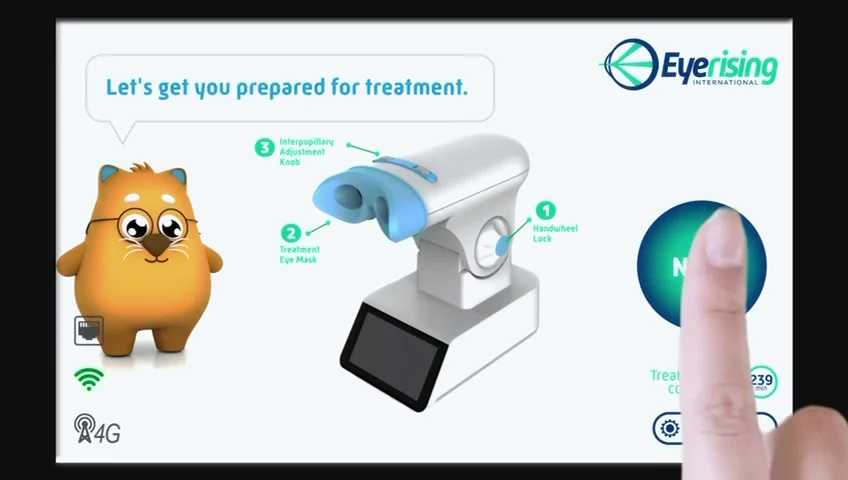
Meet the device, and Willow the Wombat

The on-screen guide, Willow, walks children through each session. Watch how a family sets up and uses the device at home.

Official Eyerising demo video
The treatment journey

From first assessment to follow-up

  1. 01

    Assessment

    The eye-care professional measures axial length, refraction and choroidal thickness (biometry and OCT).

  2. 02

    Prescription

    If RLRL is suitable, the clinic prescribes a 3, 6 or 12 month treatment through IHCC.

  3. 03

    Device at home

    The family receives the device with set-up, training and a user guide.

  4. 04

    Follow-up

    Reviews at 1 month, 3 months, then every 6 months, with session data shared online.

Common questions

What parents ask us most

What is myopia?

Myopia, or short-sightedness, is a focusing error. Near objects look clear, but distant ones such as the school board or road signs look blurry. In most cases the eyeball is longer than normal, so light focuses in front of the retina.

Why is my child’s prescription increasing?

Usually because the eye is growing too long from front to back. About 1 mm of extra axial length adds roughly 2.5 to 3.0 diopters. Treatment aims to slow that growth, not only to change the glasses number.

What is repeated low-level red-light (RLRL) therapy?

A non-invasive treatment where the child looks into a desktop device that delivers gentle red light, around 650 nm, for 3 minutes, usually twice a day, under professional supervision. Studies report significantly slower axial elongation compared with standard spectacles alone.

Is RLRL safe?

Clinical trials have reported no severe adverse events, and supervision is built into the treatment. Long-term safety beyond several years, the ideal dose and the effect after stopping are still being studied, so it must be prescribed and monitored by an eye-care professional.

Does screen time cause myopia?

Excessive screen time is associated with a higher risk, especially with long near work and little outdoor time. Reduce unnecessary screen use, take breaks, play outdoors and avoid holding devices very close.

Read all questions

Offer RLRL therapy at your clinic

Talk to IHCC about partnership, training and a demo device.